
A car alarm acts as your vehicle’s first line of defense against theft and break-ins. But a blaring siren alone isn’t always enough, especially if a thief knows how to disable it. This is where a car alarm system with a kill switch makes a real difference. A kill switch interrupts power to the fuel pump or ignition, preventing someone from starting your car even if they bypass the alarm. Whether you’re protecting a daily driver, a weekend project car, or a collector’s piece, understanding what to look for in a quality alarm with kill switch capability is essential. Let’s walk through the options available in 2026 and what matters when choosing the right system for your vehicle.
Table of Contents
ToggleKey Takeaways
- A car alarm system with kill switch provides dual-layer security by combining an audible deterrent with a fuel pump or ignition cutoff that prevents engine start, making it highly effective against determined thieves.
- Quality kill switch-compatible systems like Viper SmartStart, Compustar Elite 2-Way, and Python 5706P range from $200–$500 installed and work with both smartphone-controlled and hardwired alarm setups.
- Professional installation of the kill switch wiring is essential to avoid electrical damage or fire hazards, with technicians typically charging $150–$400 to ensure proper fusing, hidden placement, and safe power connections.
- Key features to prioritize include adjustable shock sensors, door/trunk triggers, two-way phone feedback, and starter kill switch integration that explicitly lists compatibility with your vehicle model.
- Regular monthly testing of sensors, annual wiring inspections, and prompt battery replacement in remote controls keep your car alarm system reliable and functional year-round.
What Is a Car Alarm Kill Switch and Why You Need One
A kill switch is a hidden device that cuts power to critical vehicle systems, typically the fuel pump, starter, or ignition, when triggered. Unlike an alarm that simply makes noise when someone tampers with your car, a kill switch physically prevents the engine from starting. It’s a simple but incredibly effective backup security layer.
Here’s why it matters: a determined thief might smash a window, unlock the door, and ignore the alarm, especially in a noisy parking lot or at night. With a fuel pump kill switch, they can turn the key all they want: the engine won’t catch. This passive security feature works 24/7, without batteries, apps, or subscriptions.
Kill switches are especially valuable for older vehicles that lack modern electronic theft prevention, classic cars, work trucks, or any vehicle you park in higher-crime areas. They’re also inexpensive insurance, a quality system costs $200–$500 installed, far less than a deductible or the headache of car theft. Most aftermarket car alarm systems include or offer kill switch compatibility, making it easy to layer security without replacing your entire setup.
Top Car Alarm Systems With Integrated Kill Switches
Several solid options stand out for 2026. The Viper SmartStart series combines smartphone control with optional kill switch integration. You get 2-way feedback so your phone tells you if someone’s messing with your car, plus the ability to remotely start and lock/unlock from your phone. Wiring a Viper system for a kill switch is straightforward, and most installers are familiar with the setup.
The Compustar Elite 2-Way offers similar smartphone capability with strong Bluetooth range and customizable alerts. Like Viper, it plays nicely with aftermarket kill switches and gives you real-time notifications if sensors are triggered.
If you want a simpler, more budget-friendly option, the Python 5706P is a hardwired system that focuses on core features: shock sensors, door triggers, and a reliable horn. It’s less flashy than app-controlled systems, but it’s rock-solid and pairs well with an independent kill switch module.
For GPS-equipped fleets or high-end vehicles, current car alarm reviews on CNET highlight advanced systems with starter kill switches built directly into the control module. The investment is higher, but you get engine immobilization plus GPS tracking if your car goes missing.
When shopping, look for systems that explicitly list kill switch compatibility or have a relay module option. Check online forums specific to your vehicle, owner communities often share proven component combinations that work well together.
Key Features To Look For in a Quality Car Alarm System
Beyond the kill switch, several features separate good systems from mediocre ones.
Shock and Tilt Sensors: These detect if someone hits the car, leans on it, or tilts it with a tow truck. Look for adjustable sensitivity so you don’t get false alarms from traffic vibrations or a careless parking lot bump. A two-stage sensor is ideal, light contact triggers a warning chirp, hard impact sets off the full alarm.
Door and Trunk Triggers: These confirm when someone opens your doors or trunk without disarming the system first. Wired systems use magnetic switches on each entry point: wireless systems use door sensors that communicate to the main control unit.
Two-Way Feedback (if choosing an app-based system): This means your phone notifies you when the alarm triggers, not just the car. One-way systems only let you arm/disarm remotely: two-way actually tells you what’s happening. Recent studies on car alarm features confirm that two-way systems reduce false alarm stress and give owners genuine peace of mind.
Starter Kill Switch Integration: Some systems have it built in: others require a relay module. Either way, confirm your installer can wire it to cut fuel pump or starter power without interfering with factory electronics.
Range and Reliability: For hardwired remotes, 400+ feet is standard. Bluetooth/app systems depend on phone signal and battery. Look for systems with backup battery power to keep the alarm active during a power loss.
Professional Support: Can you reach tech support if something breaks or you need wiring help? Avoid no-name brands with zero customer service. Stick with established manufacturers like Viper, Compustar, or Python.
DIY Installation vs. Professional Setup
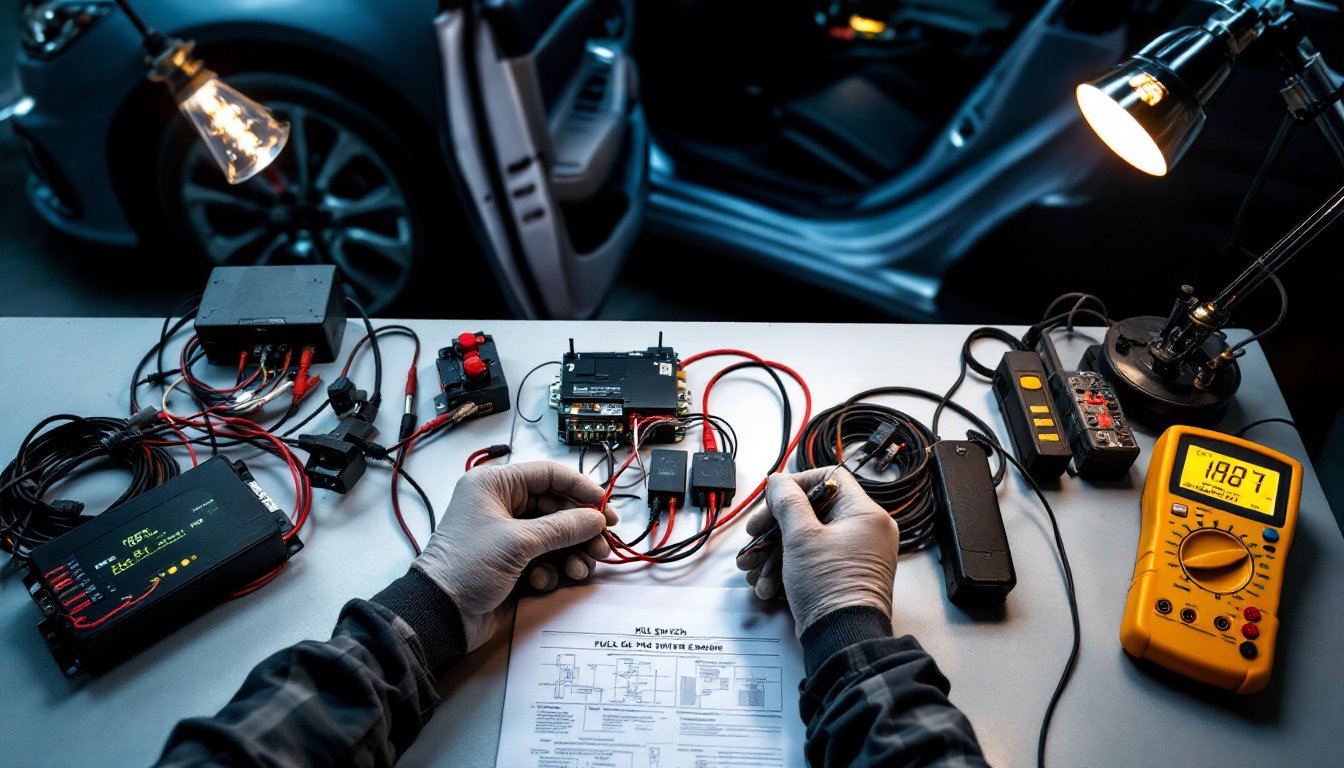
You can install a basic car alarm yourself if you’re comfortable running wires through door panels and under the dashboard. Most aftermarket systems come with clear wiring diagrams, and YouTube walkthroughs exist for popular models. The main tools you’ll need are a wire stripper, crimper, multimeter, and trim removal tools to access panels safely.
That said, a kill switch installation involves splicing into high-amperage circuits, specifically the fuel pump or ignition lines. If you get this wrong, you risk electrical damage, fire hazard, or a car that won’t start even when you want it to. This is one area where a professional installer is worth the money.
A competent car alarm technician (often found at car stereo shops or mobile electronics installers) will cost you $150–$400 for labor, depending on system complexity and your vehicle’s wiring. They’ll ensure the kill switch relay is properly fused, hidden discreetly, and wired to a clean power source. They’ll also test everything before you leave.
If budget is tight, you can install the alarm yourself and have a pro handle the kill switch wiring separately. That way you spread the cost and keep the most critical, dangerous part in expert hands. Never skip the professional installation if you’re unsure, a botched fuel pump wire can disable your vehicle or worse.
Leading installation guides and expert reviews emphasize the importance of proper kill switch setup and suggest having a certified installer verify all connections.
Maintenance and Testing Tips for Your Car Alarm
Once your alarm is installed, test it monthly. Disarm the system, then trigger each sensor (tap the door, touch the hood, bump the car) to confirm they all work. Check that the remote or app responds quickly and that the alarm sounds loud enough to notice.
For kill switch testing, it’s simple: start the car normally to confirm it runs with the system disarmed, then check that it doesn’t start when the kill switch is active (assuming you know how to safely toggle it). Your installer should show you how to manually override the kill switch in case of emergency.
Keep the wiring and battery connections clean and dry. Moisture and corrosion are the enemy of any car electrical system. Every year or two, pop open the hood and look for visible wire damage, loose connectors, or battery terminal buildup. A few minutes of inspection prevents headaches down the road.
If you notice false alarms, the alarm going off without a reason, adjust the shock sensor sensitivity or have a professional check for ground faults. False alarms are annoying and can drain your car battery if the system keeps running.
Replacing batteries in remote controls is straightforward and usually costs $5–$15. Most systems use standard CR2032 or 2032 cells available at any drugstore. If your app-based system isn’t sending notifications, check that your phone’s Bluetooth is enabled and within range, and that the car’s main module battery is good.
Finally, keep your installer’s contact info handy. If something stops working or you have questions about the kill switch override procedure, they can usually troubleshoot quickly over the phone or in person.
Conclusion
A car alarm system with an integrated or paired kill switch is one of the smartest security upgrades you can make. It combines visible deterrence (the alarm) with passive protection (the kill switch), making your vehicle a much harder target. Whether you choose a smartphone-connected system for convenience or a hardwired setup for simplicity, the key is proper installation and regular testing. Invest in professional wiring for the kill switch, keep sensors clean and functional, and you’ll have reliable protection for years to come. Your peace of mind is worth it.