
When the power goes out, your home security system shouldn’t. That’s where a quality 12V battery for your alarm system comes in. Most modern home alarm systems rely on backup power to keep protecting your house during outages, which is why choosing the right battery matters just as much as the system itself. Whether you’re upgrading an existing setup or installing a new alarm system from scratch, understanding the battery options, and how to maintain them, ensures your security never goes dark. This guide walks you through everything you need to know about selecting, installing, and caring for a 12V battery backup for your alarm system.
Table of Contents
ToggleKey Takeaways
- A 12V battery for alarm systems provides critical backup power during outages, typically lasting 24–48 hours and stabilizing voltage to protect sensitive electronics.
- Sealed Lead-Acid (SLA) batteries are the affordable, reliable standard for residential alarm systems, costing $40–$80 and lasting 3–5 years, while Lithium-Ion batteries offer 10+ years of service but cost $150–$300.
- Always verify your alarm panel’s manual for the correct battery size, voltage, and Ah rating before purchasing, as batteries are not universally interchangeable.
- Proper installation requires connecting the positive terminal first, positioning the battery in a cool dry location, and performing annual power tests to ensure reliable backup protection.
- Replace SLA batteries every 3–5 years and lithium batteries every 10+ years, and monitor for low-battery warnings to prevent security gaps during power outages.
Why 12V Batteries Are Essential For Home Alarm Systems
Your alarm system is only as reliable as its power supply. When mains power fails, whether from a weather event, an accident, or a technical glitch, a 12V backup battery keeps your sensors, control panel, and communication systems running. Most modern alarm panels are designed to operate on 12V DC power or accept 12V backup power during outages.
Without a battery backup, a power outage lasting just a few hours would leave your home unprotected. More importantly, many alarm monitoring services require verified backup power: some won’t monitor a system without it. Building codes in some jurisdictions also mandate backup power for alarm systems, particularly in commercial or multi-unit residential buildings.
A good battery backup typically powers your system for 24 to 48 hours, giving you a reasonable window for power restoration or alternative action. The battery also stabilizes voltage, protecting sensitive circuit boards from surges when power is restored. Think of it as insurance that works around the clock, not just when someone’s actively trying to break in.
Types Of 12V Batteries Used In Alarm Systems
Sealed Lead-Acid Batteries
Sealed Lead-Acid (SLA) batteries are the traditional workhorse of alarm system backups. They’re reliable, affordable, and widely available. Common models include the 12V 7Ah (amp-hour) and 12V 10Ah sizes: the Ah rating tells you how long the battery can supply power at a given load.
SLA batteries are maintenance-free once installed and can sit idle for months without significant discharge. But, they’re heavier and bulkier than newer options, and they degrade over time, typically lasting 3 to 5 years before capacity drops noticeably. Temperature matters too: SLA batteries perform poorly in extreme cold and can swell or fail in excessive heat.
For most standard residential alarm systems, an SLA 12V 7Ah battery is the go-to choice. It’s large enough to back up a typical panel and a handful of wireless sensors for a full day without mains power. Cost usually runs $40–$80, depending on brand and where you buy.
Lithium-Ion Batteries
Lithium-ion (Li-Ion) batteries are the newer player in the alarm backup arena. They’re lighter, more compact, and hold their charge longer than SLA, often 10+ years compared to 3–5 for lead-acid. They also perform better in temperature extremes and charge faster.
The downside? Cost. A quality 12V lithium backup battery typically runs $150–$300, about 3 to 5 times the price of an SLA. Not all older alarm panels are compatible with lithium, so check your system’s specs before upgrading. Lithium is overkill for a basic wired system in a climate-controlled home, but it’s worth considering if your system is newer, you live somewhere with frequent outages, or you want a long-term, low-maintenance solution.
Both battery types work reliably when properly matched to your system’s power requirements. The choice comes down to budget, how often you lose power, and how long you want the battery to last before replacement.
How To Choose The Right 12V Battery For Your Alarm System
Start by checking your alarm panel’s manual or specifications sheet. It will list the required voltage (almost always 12V DC for residential systems), the battery size it uses, and the recommended Ah rating. Don’t guess, using the wrong battery could fail to power your system or damage it.
Next, calculate your system’s power draw. Most hardwired alarm panels consume 200–500 milliamps at rest and up to 1–2 amps during active use or when the siren sounds. A 12V 7Ah battery can theoretically back up a 300mA panel for roughly 23 hours: add wireless sensors and the time shrinks proportionally. If you want your system running for a full 48 hours without power, you’ll need a larger battery or lower power draw.
Consider your environment. In hot climates, SLA batteries degrade faster: lithium or a higher-capacity SLA is a safer bet. In areas with frequent outages, investing in lithium buys you peace of mind and years of reliable service. If your system rarely loses power and you’re budget-conscious, an SLA 7Ah or 10Ah is perfectly adequate.
Finally, verify compatibility. Some newer systems or smart alarm setups require specific battery models or have voltage regulation features that work better with certain chemistries. Wired home alarm systems often integrate battery backups directly into the control panel, while hybrid or wireless systems may use external batteries. Always cross-check your panel’s manual or contact the manufacturer before buying. Don’t assume all 12V batteries are interchangeable: they’re not. Current reviews and buying guides available from sources like Tom’s Guide can also help you compare specific models for your system type.
Installation And Maintenance Tips
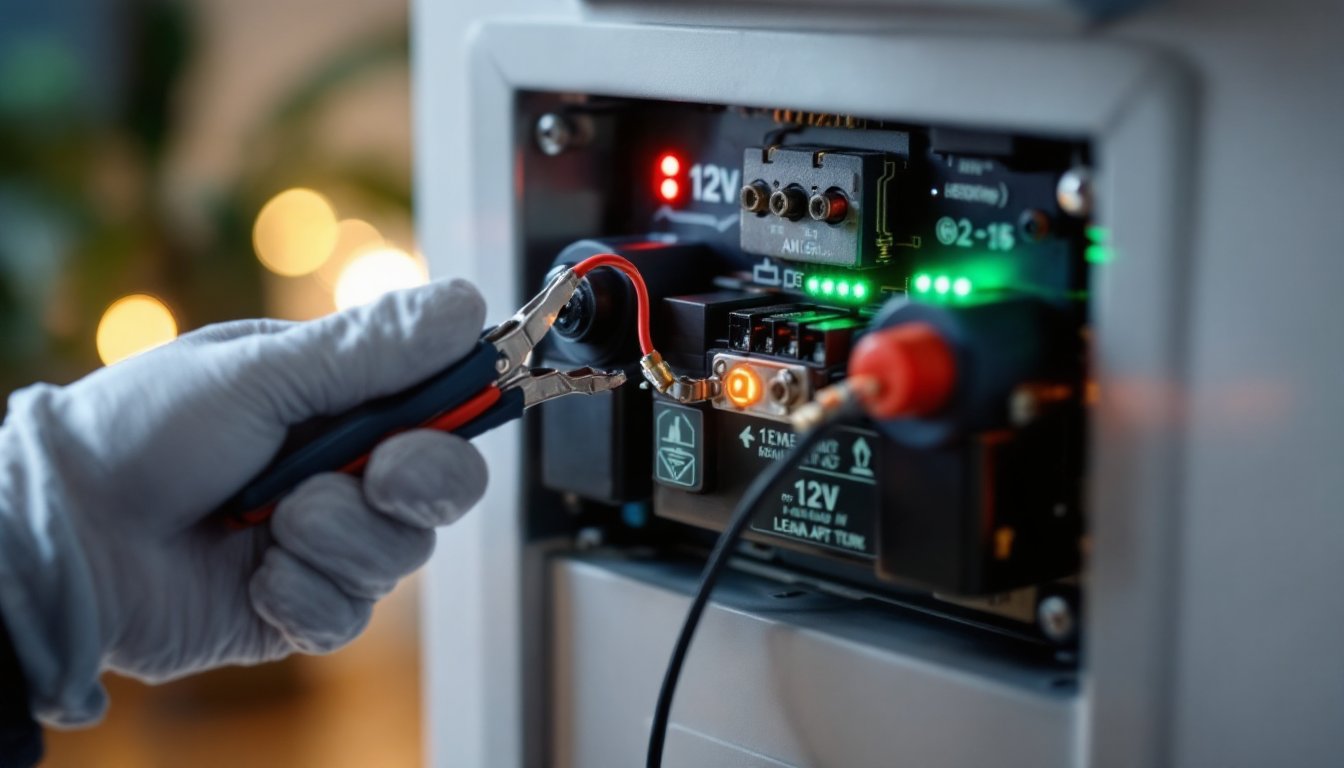
Installation is usually straightforward but requires care. Most alarm panels have a dedicated battery terminal block inside the enclosure. Before opening the panel, turn off mains power and wear electrical-safe gloves. Unplug any connected devices, then carefully disconnect the old battery (negative terminal first, always). Inspect the terminals for corrosion: clean them with a dry cloth or a small amount of white vinegar if needed.
Positioning matters. Mount the battery in a cool, dry location away from direct sunlight and extreme temperatures. A closet shelf, basement corner, or utility room works well. Ensure the battery is secure and won’t shift if the cabinet is bumped or if there’s vibration. Use battery hold-downs or straps if your panel doesn’t have built-in mounts.
Connecting the new battery: Remove any plastic caps from the terminals. Connect the positive (red) terminal first, then the negative (black) terminal. This order prevents accidental short circuits. Some panels will beep or show a power indicator once the battery is detected, a good sign the connection is solid.
Maintenance prolongs battery life. For SLA batteries, check the terminals every 6 months for corrosion or loose connections. A small amount of white powdery residue (lead sulfate) is normal: gently clean it away. Every 12 months, perform a brief power test: turn off mains power for 30 seconds and verify the panel stays active and the alarm sounds if triggered. This confirms the battery is holding charge.
Batteries don’t last forever. Replace an SLA battery every 3–5 years, even if it still works: internal chemical changes reduce its ability to handle sustained loads in an emergency. Lithium batteries last longer but should still be checked annually. If your panel shows a low-battery warning or the backup time is noticeably shorter, replacement is due. Keep a replacement battery on hand if your system monitors a business or critical area: downtime isn’t an option.
For installation help or if you’re uncomfortable working inside your panel, call a licensed alarm technician. It’s not difficult, but smart home technology guides and manufacturer documentation can walk you through the process visually if you prefer self-service. Always photograph your panel’s interior before and after work so you can reference the layout if something goes wrong.
Conclusion
A reliable 12V battery for your alarm system is a small investment with big peace-of-mind payoff. Whether you choose an affordable SLA or a longer-lasting lithium option, the key is matching the battery to your system’s specs and committing to basic maintenance. Check your panel’s manual, verify the required size and voltage, and don’t skip the installation or testing steps. Your security system’s backup power is only as good as the battery you put behind it, so choose wisely and check it regularly.